
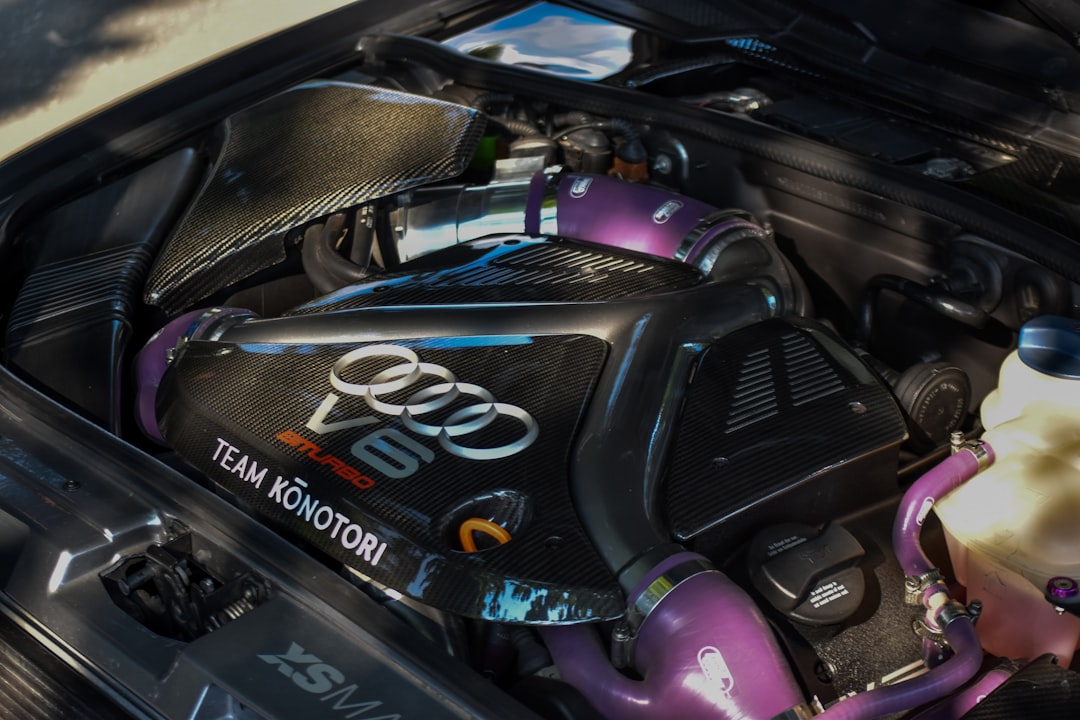
The B8 S4 (2010-2016) and B8/B8.5 S5 (2010-2017 V6 cars) replaced the 4.2L V8 of the previous generation with a 3.0L supercharged V6 — Audi's EA837 TFSI. 333 hp and 325 lb-ft factory, but more importantly: the platform with the largest aftermarket per dollar of any modern Audi V6. APR, JHM, ECS, AWE, IE, 034 — every Audi tuner cut their teeth on this engine.
Here is the real ownership guide. Less brochure, more inspection list.
The 3.0T architecture, briefly
- 3.0L V6, 90-degree, aluminum block, dual-cam-per-bank
- Direct injection (no port wash on intake valves)
- Roots-style supercharger sits in the valley between the cylinder banks
- Air-to-water intercooler integrated into the supercharger housing
- ZF 8HP automatic on most cars; 6-speed manual available on US S4 sedan
- Quattro standard
The supercharger arrangement is similar in concept to the Mercedes M113K (also valley-mounted) but with a much smaller footprint and an internal intercooler.
Pulley swap: the gateway modification
The single most common B8 S4/S5 modification is a smaller supercharger pulley. The factory pulley is approximately 68mm; aftermarket sizes step down to 65mm, 61mm, 57mm, and lower for serious builds.
What the pulley does: Smaller pulley = supercharger spins faster = more boost. A pulley swap alone moves a stock S4 from ~10 psi to ~13-15 psi. Combined with a tune, gains are dramatic.
Pulley sizes and rough output:
- 68mm (stock): 333 hp factory
- 65mm + Stage 1 tune: ~400 hp
- 61mm + Stage 2 tune + intercooler upgrade: ~450-475 hp
- 57mm + supporting mods: ~500-525 hp
- Below 57mm: requires injectors, fuel pump upgrade, sometimes upgraded supercharger snout bearings
The real consideration: smaller pulley = more belt slip if the OEM tensioner is original and tired. Verify the supercharger belt tensioner condition before going below 65mm. $200-$400 for a heavy-duty tensioner upgrade.
The intercooler reality
The factory air-to-water intercooler has an integrated heat exchanger that struggles under sustained load. Stock S4s heat-soak after one hard pull and lose meaningful power on the second.
Upgrade options:
- Heat exchanger upgrade only (CTS, AWE, 034): $700-$1,200. Reduces IATs significantly, retains the OEM intercooler core.
- Full intercooler core swap (Wagner, IE): $1,800-$3,500. Required if you are running below 61mm pulley or chasing track-day consistency.
- Larger reservoir / dual pump: typically bundled with full IC swaps.
A B8 S4 with the OEM cooling system at 100°F ambient on a hard pull will see IATs in the 130-150°F range. A car with full IC upgrades will hold 90-100°F. The difference in ignition timing the ECU can run between those numbers is the difference between rated output and a power loss.
Intake valve carbon (every direct-injected B8)
The 3.0T is direct-injected with no port wash, so intake valve carbon accumulates exactly as it does on every direct-injected Audi/VW engine of the era.
Symptoms:
- Rough idle, especially cold
- Misfire codes (typically random cylinder)
- Hesitation on light throttle
- Power loss creeps in over time, owners often don't notice until after the cleaning
Service: Walnut-shell media blast through the intake ports with the manifold off. Specialist shops (any reputable European indie): $700-$1,500.
Interval: Every 60-80K miles. More often if the car is short-tripped or runs lower-quality fuel.
The PCV catch can question: A properly plumbed catch can reduces the rate of carbon accumulation but does not eliminate it. Worth installing on a heavily modified car; less critical on a stock one.
Electric coolant pump (the failure that strands cars)
The EA837 uses an electric auxiliary coolant pump (often called the "after-run pump" but doing more than that) that fails in a known pattern. When it goes, the car can overheat at idle or after shutdown, sometimes silently.
Symptoms:
- Coolant temperature climbing in traffic
- Steam or coolant smell from the front of the engine after shutdown
- DTC P2BAC, P0480, P0493, or generic cooling-related codes
- Visible coolant leak from the pump or its housing
Repair: OEM electric pump: $200-$350 part. Labor: $300-$600 depending on access (B8.5 cars are tighter). DIY-able for a competent owner.
Walk-away? No, but assume it as a maintenance item if not done. Most B8 S4s past 100K miles have either had the pump replaced or are due.
Injectors
Direct injectors fail by sticking, leaking internally, or losing flow consistency.
Symptoms:
- Misfire codes, often hot-only
- Fuel smell at idle
- Hard start when warm
- Failed cylinder-balance test on a scan tool
Cost: OEM injectors $180-$280 each. Full set of 6: $1,200-$2,000 parts and labor. Most cars do not need the full set replaced — diagnosis-driven cylinder-by-cylinder is common.
Other items every B8 S4/S5 buyer should inspect
- Timing chain (rear of engine): the EA837 has timing chains at the rear (bellhousing side). Stretch is uncommon under 100K miles but possible. Cold-start rattle that lasts more than 1-2 seconds warrants chain inspection. Repair is transmission-out: $3,500-$6,500.
- Supercharger snout bearing: less common than on the M113K but possible. Whining noise that changes with engine speed.
- Thermostat housing: plastic, develops weeps. $200-$400 repair.
- Carbon buildup symptoms vs injector failure: these can overlap. Walnut blast first, then assess.
- DSG / S-Tronic 7-speed (DL501): S5 cars equipped with the wet-clutch S-Tronic have their own service interval (40K mile fluid + filter, ~$400-$600 at a competent shop). Skipping it is the single biggest mistake S-Tronic owners make.
- Differentials and Quattro: the rear diff in some B8 S4s is a Sport Differential — a torque-vectoring unit with its own service interval and failure modes. Whining noise from the rear is the warning sign.
- Suspension: OEM dampers are short-lived under spirited driving. Most modified B8s are on coilovers by 80K miles.
The B8 vs B8.5 distinction
- B8 (2010-2012): original release. PRNDS shifter, older infotainment, conventional headlights.
- B8.5 (2013-2016 sedan, 2013-2017 coupe/cab): facelift, MMI 3G+, LED headlights available, minor engine refinements. Same fundamental engine.
For shopping purposes, B8.5 commands a small premium for the styling and electronics. Mechanical reliability is similar.
The S4 vs S5 split
- S4 sedan (B8 chassis code): the volume car, manual or 7-speed S-Tronic, 4-door practicality.
- S5 coupe / cabriolet (B8 chassis code, different body designation): same drivetrain; coupe is the look most buyers chase.
- S5 V8 (2008-2011 only): the original B8 S5 had the 4.2L V8 (M-coded engine), not the 3.0T. Different car entirely. Verify which engine before buying — the 4.2 V8 S5 has different timing chain concerns and a different failure list.
The shopping checklist
A clean B8 S4/S5 in 2026 looks like:
- Service records showing carbon cleaning at least once
- Electric coolant pump replaced (or budget for it)
- Supercharger belt and tensioner serviced
- DSG fluid and filter on schedule (S-Tronic cars)
- Thermostat housing addressed if leaking
- Reasonable mod list with documentation — pulley size, intercooler, tune, supporting mods
- No "supplied in a Ziploc bag" mod story
Avoid:
- Cars with mystery tunes and no records of supporting mods
- Cars with original DSG fluid past 60K miles
- Cars with cold-start chain rattle and "we don't know what that is"
- B8 S5 cars where the seller mixes up the V8 and V6 history
The realistic ownership math
Stock or Stage 1 B8 S4, well-maintained: $2,000-$3,500/year in maintenance. Reasonable.
Stage 2 B8 S4 with full supporting mods: $3,000-$5,000/year. The engine is robust at this level if assembled correctly.
Stage 2+ / 500+ hp build: budget for accelerated wear on injectors, fuel pump, clutches (manual cars), DSG service intervals (DSG cars), and supercharger components. This is where ownership economics depend heavily on the previous owner's competence.
The bottom line
The B8 S4/S5 is one of the most modifiable, most enjoyable, and most well-supported Audi V6 platforms ever built. Stock, it is a 333 hp executive sport sedan. Modified, it is a 500+ hp four-door rocket on factory chassis components. The path between those two outcomes runs through documented carbon cleaning, a non-failed electric coolant pump, and a tune that came with paperwork.
Buy the records, not the dyno sheet.
B8 S4/S5 parts and donor components? Our Audi catalog carries 3.0T-specific components from verified B8 donors.